
APIs
"research to better understand user experiences with APIs and to gather feedback that will help shape their future"
I have an interview scheduled for Friday night regarding APIs. I’m being interviewed as an API user by an API maintainer, likely about how to improve the API ecosystem. I thought I should prepare some notes beforehand, so I’ve sketched out a draft.
Why I Use APIs in the First Place
Before talking about ecosystem improvements, it is worth clarifying why I use APIs at all.
For me, an API is not just a tool for building applications. It is a lens to understand a system from the inside.
I use APIs to explore how a platform actually behaves beyond the surface interface. Through structured queries, I can retrieve statistical data for research purposes. I can observe patterns in user behavior, community contributions, and system dynamics. That data helps me form evidence-based suggestions to improve the system, whether socially, culturally, or technically. APIs turn intuition into measurable insight.
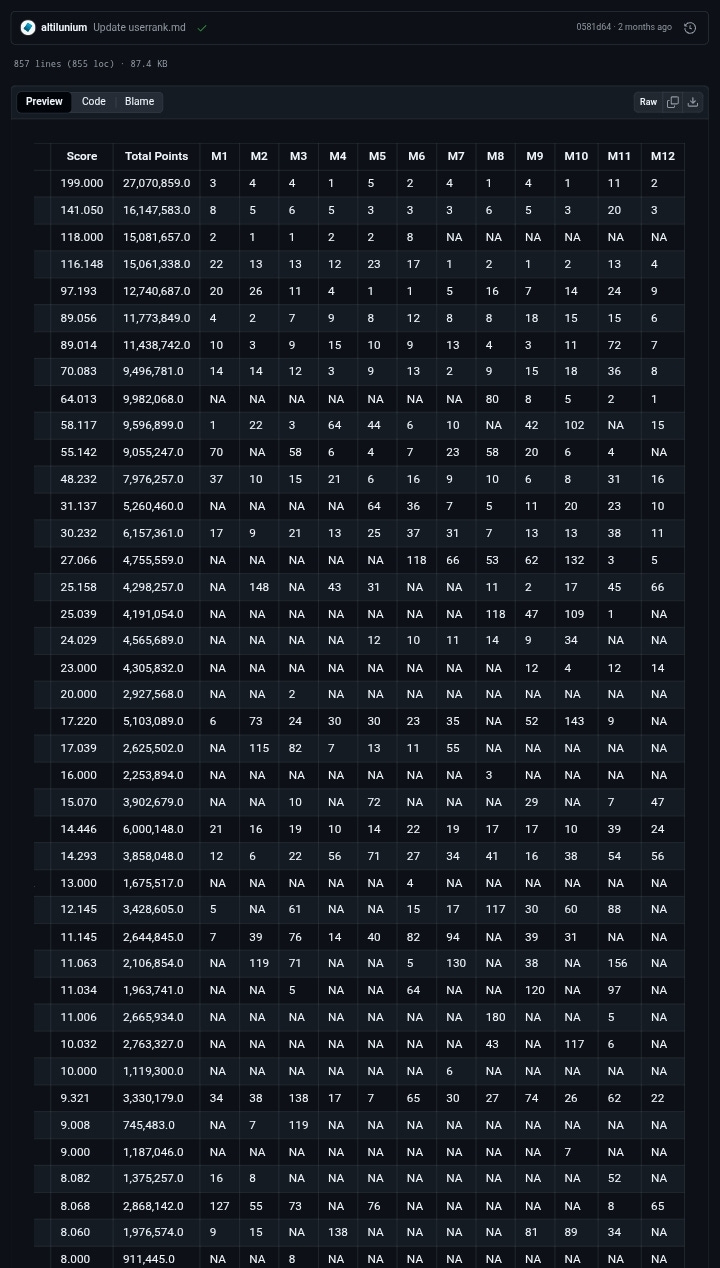
There is another motivation as well. I like implementing new features. Sometimes the official development roadmap moves slowly, which is completely understandable given limited resources and competing priorities. But when an idea feels viable and the API already exposes the necessary building blocks, I prefer to prototype it myself. Public APIs make that possible. They allow experimentation without forking the entire platform. They enable third-party innovation without needing core commit access. In many cases, these experiments can later inform upstream improvements.
So my perspective in this upcoming interview is shaped by two roles: researcher and builder.
With that context in mind, here are the areas I think deserve attention.
AI Traffic, Abuse, and the Cost of Anonymity
This is the elephant in the room.
With the rise of AI-powered scraping and automated data consumption, many API maintainers are reacting defensively. Rate limits are tightened. Anonymous access gets restricted. Some endpoints are blocked entirely.
The problem is understandable. Infrastructure is not free. But when enforcement is reactive and broad, genuine developers get collateral damage.
One possible direction is to move away from free, anonymous access entirely. Require registration for all meaningful API usage. Assign API keys. Monitor usage patterns transparently.
This does several things: It discourages large-scale abuse; It gives maintainers better visibility into traffic patterns; It creates accountability without punishing everyone equally.
But if registration becomes mandatory, it must be accompanied by a better social layer. A space where registered API users can interact with maintainers. A visible community, not just an authentication gate. Identity should not just be about enforcement. It should be about participation.
Third-Party Innovation Should Flow Back
In many ecosystems, new functionality appears first in third-party tools. Developers experiment. They push boundaries. They create clever workflows that the core platform never envisioned.
Often, those innovations remain external forever.
But if a third-party integration proves its value, the core maintainers should consider adopting or formalizing it in the main codebase. Otherwise, fragmentation increases and users face inconsistent experiences.
This requires maintainers to actively observe how the API is being used in the wild. It also requires third-party developers to document their patterns clearly.
An API should evolve based on real usage, not just internal priorities.
Backward Compatibility Is Sacred
Few things damage trust faster than unexpected breaking changes.
If an API endpoint changes behavior without a clear migration path, downstream systems fail. Production jobs break. Dashboards go dark. Users lose confidence.
Backward compatibility is not a luxury. It is a commitment.
When breaking changes are unavoidable, they should follow strict principles: Version the API properly; Deprecate old behavior gradually; Provide migration guides; Communicate timelines clearly and repeatedly.
Maintainers often see change as improvement. Users often experience change as risk. Bridging that perception gap is critical. Stability is a feature.
Communication Infrastructure Is Technical Infrastructure
We often invest in scaling databases and optimizing queries. But we underinvest in scaling conversation.
Slack groups, IRC channels, public forums, and documentation portals are part of the operational backbone. If they are chaotic, under-moderated, or outdated, the ecosystem suffers.
A well-organized communication space can : Surface common issues quickly; Reduce duplicate bug reports; Encourage peer-to-peer support; Make new developers feel welcome
Long-term sustainability depends on community health as much as server health.